
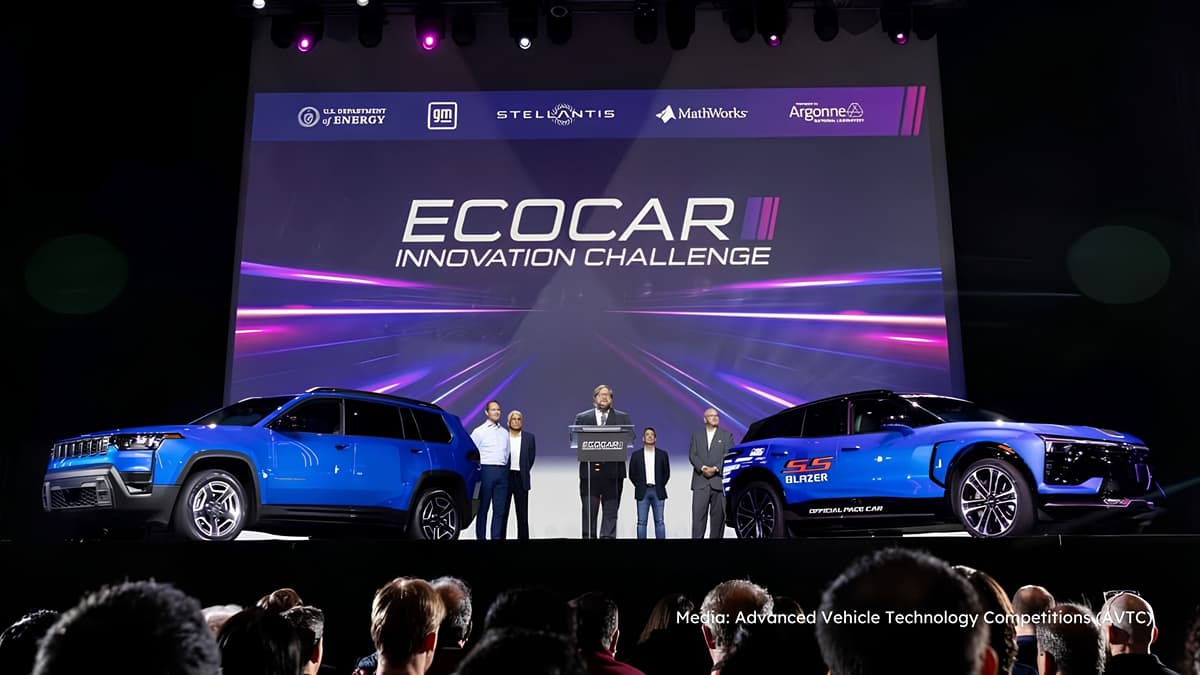
Eight companies are joining the EcoCAR Innovation Challenge as new program sponsors. The challenge is managed by Argonne National Laboratory and runs through spring 2030. It is the 15th series of the Advanced Vehicle Technology Competitions (AVTC), the U.S. Department of Energy’s (DOE) flagship workforce development program. Since 1988, AVTC competitions have had engineering students redesign production vehicles around new technology.
The DOE, General Motors, Stellantis, and MathWorks are the challenge’s headline sponsors. Over the next four years, teams from 20 North American universities will re-engineer vehicles supplied by GM and Stellantis. Students will follow the same development process automakers use while building technical, leadership, and project management skills. A separate Product Innovation track has students developing products and processes that support their vehicle work.
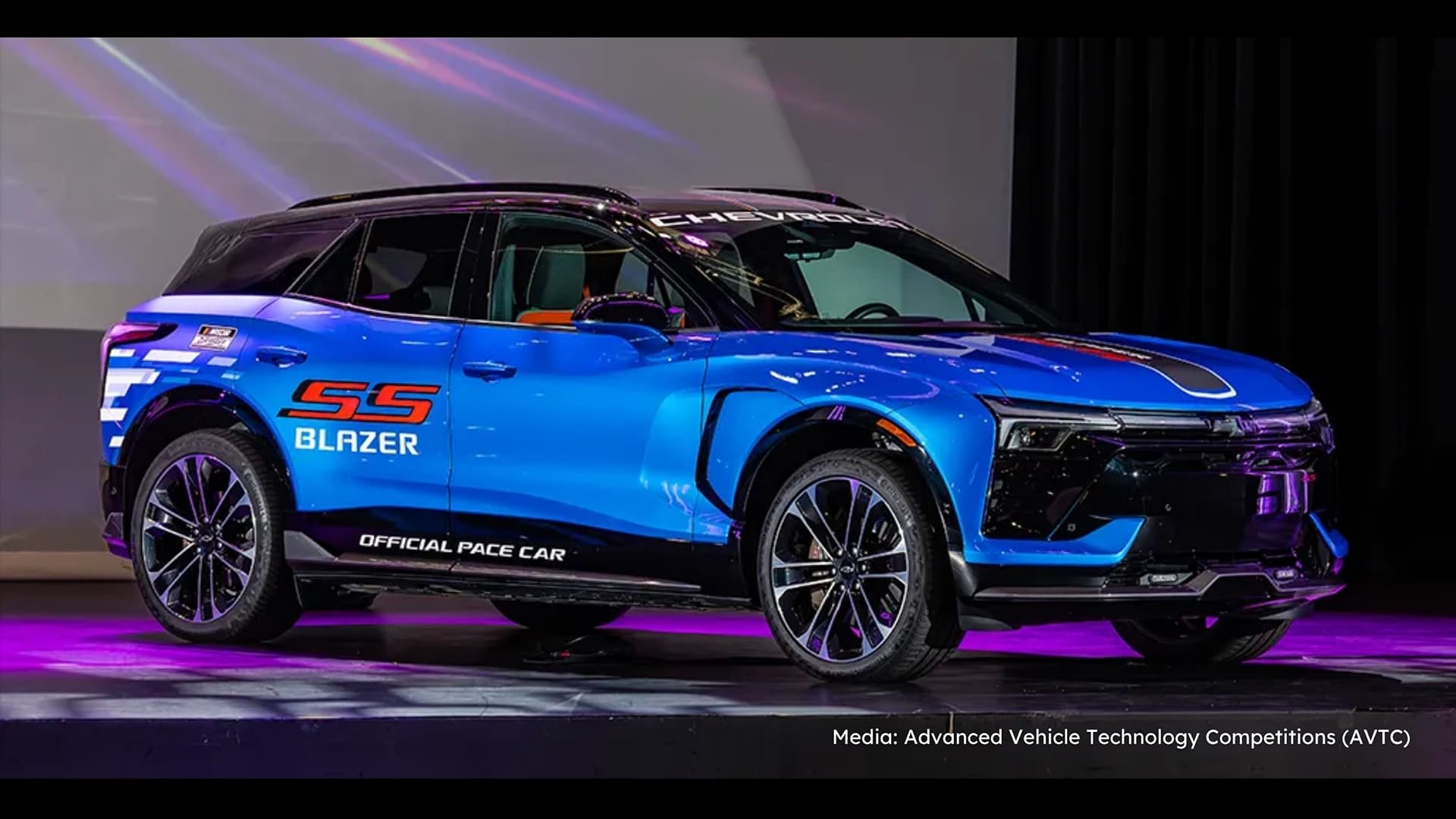
With a 2026 Chevrolet Blazer EV, teams on the General Motors track will work on connected and automated driving features, advanced propulsion, and vehicle-to-everything (V2X) communication. Ten universities are competing on the GM track, including Georgia Tech, Virginia Tech, and Western Michigan University.
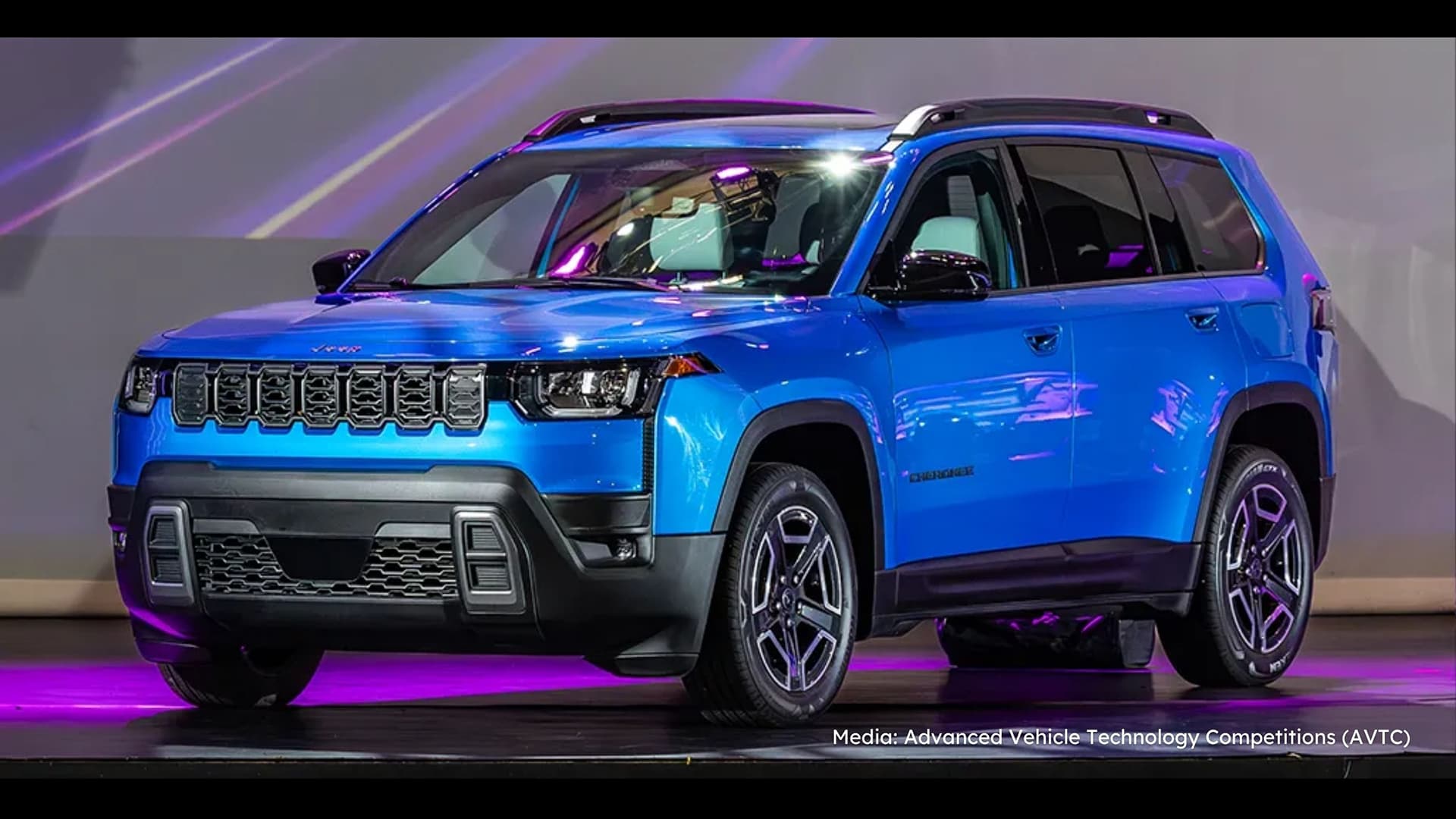
Using a 2026 Jeep Cherokee Hybrid, Stellantis teams will integrate a high-voltage energy storage system and an electric drive unit while developing advanced controls for on- and off-road driving. Ten universities are competing on the Stellantis track, including Ohio State, Texas A&M, and the University of Waterloo.
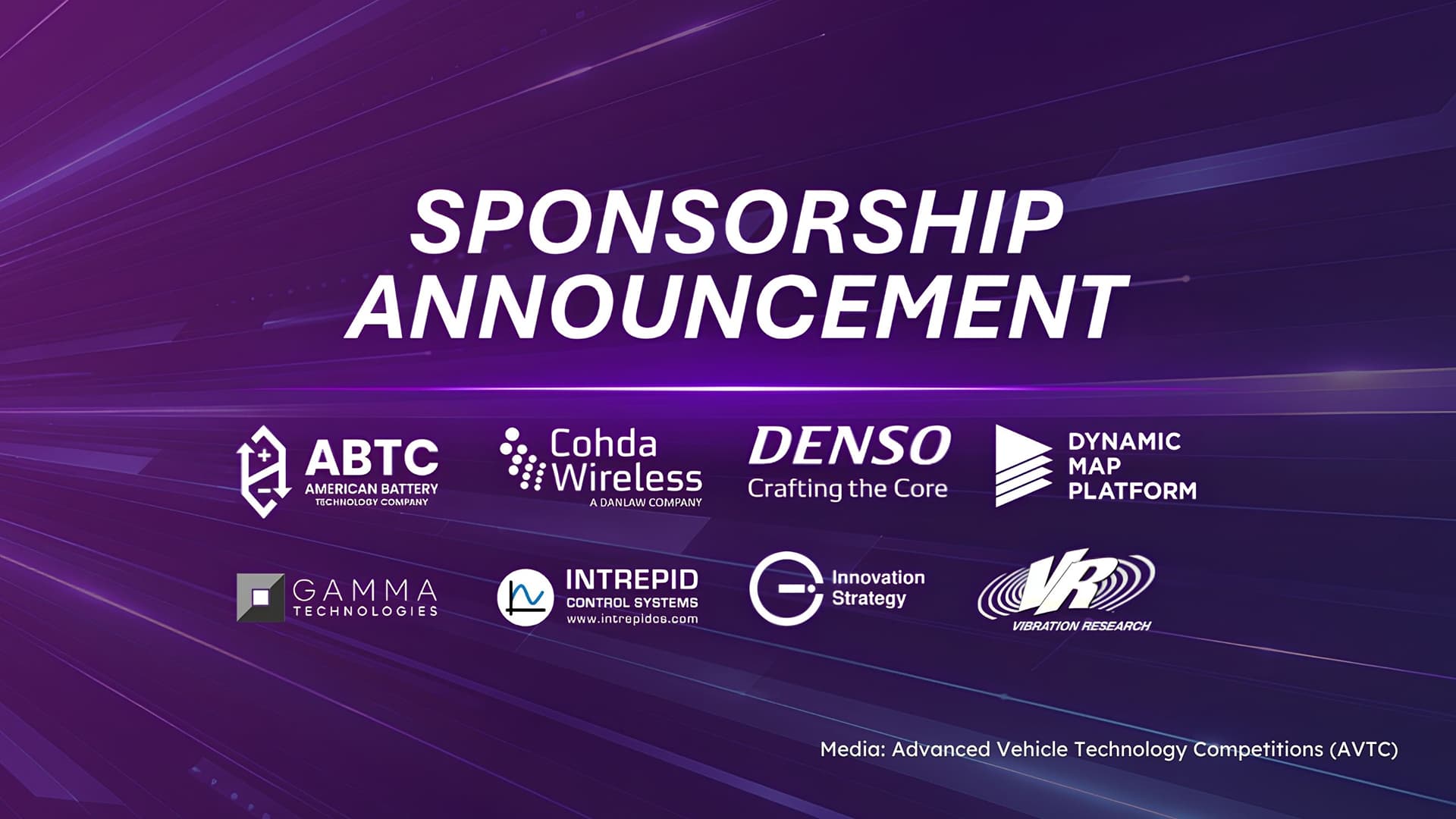
Sponsors provide teams with tools, technical expertise, and mentorship. According to Jesse Alley, EcoCAR Innovation Challenge program director, industry partnerships are "at the heart of what makes EcoCAR such a valuable experience for students."
American Battery Technology Company
American Battery Technology Company (ABTC) recycles lithium-ion batteries and produces battery-grade materials in the United States. The company is working to build a domestic supply chain for the critical metals used in EVs and energy storage, reducing reliance on imports.
ABTC previously sponsored the Battery Workforce Challenge, another DOE competition, where it created a Design for Recyclability award. Its battery materials expertise fits well with the high-voltage battery systems Stellantis teams will design and integrate.
Cohda Wireless
Founded in Adelaide, Australia, in 2004, Cohda Wireless develops V2X technology that lets vehicles communicate with other vehicles, roadside infrastructure, and pedestrians. Now part of the Danlaw group, Cohda supplies V2X hardware and software to automakers, suppliers, and road authorities around the world.
GM track teams will develop V2X communication for the Blazer EV, putting Cohda's specialty at the center of their work. Cohda hardware has also appeared in past EcoCAR competitions, including an on-board unit Ohio State's team used to communicate with traffic infrastructure during the EcoCAR Mobility Challenge.
DENSO North America
DENSO is a global supplier that makes technology and components for nearly every vehicle make and model on the road. Its North American headquarters sits in Southfield, Michigan, and the company has more than 23,000 employees at over 40 locations across the U.S., Canada, and Mexico.
DENSO has sponsored past EcoCAR competitions, including the EcoCAR Mobility Challenge and EcoCAR EV Challenge. The company supports STEM education and hands-on learning, and it has hired engineers who came up through EcoCAR.
Dynamic Map Platform
Dynamic Map Platform (DMP) creates high-definition (HD) maps and software for driver assistance systems and self-driving vehicles. Its North American team is based in Livonia, Michigan, and its maps support GM's Super Cruise hands-free driving system.
DMP's maps offer centimeter-level accuracy, giving automated driving systems a precise picture of the road. That experience will support GM track teams as they develop connected and automated driving features for the Blazer EV.
Gamma Technologies
Gamma Technologies develops GT-SUITE, simulation software automakers and suppliers have used for more than 30 years. Engineers use it to model battery thermal management, electric drives, and overall vehicle energy use, testing ideas virtually before building them.
Through EcoCAR, students will get access to GT-SUITE, the same software engineers use across the industry for powertrain and vehicle development. Teams can simulate design changes before making them on the vehicle.
Growth Innovation Strategy
Growth Innovation Strategy (GIS) is a consulting firm that advises business leaders on turning strategic opportunities into new products, services, and growth. GIS is a leading advisor to EcoCAR's new Product Innovation track, running workshops and mentoring students on the business side of engineering. Teams will learn to pinpoint who actually needs a technology, test their assumptions early, and build the case that an idea can succeed outside the lab.
Intrepid Control Systems
Based in Troy, Michigan, Intrepid Control Systems makes hardware and software tools engineers use to develop and test vehicle networks, connectivity, autonomy, and embedded systems. The company is known for its automotive Ethernet devices and supports CAN, CAN FD, LIN, FlexRay, AUTOSAR, J1939, and other in-vehicle networks and protocols.
Intrepid's work with EcoCAR is already underway. Vincent Lombardi from Argonne recently visited Intrepid's headquarters to pick up the first Intrepid equipment kits and tour its manufacturing operation with Director of Manufacturing Kevin Kitlinski. Intrepid team members also visited Western Michigan University, a GM track school, to support its first year in the program.

Each year, Intrepid opens its Troy headquarters for SDV Social, a networking event that brings the industry together for live tech demos and an expert panel on the future of software-defined vehicles. AutoVision News Radio host Carl Anthony moderated the 2026 panel, and the full discussion is available as a replay on Spotify, Apple Podcasts, and Amazon Music.
Vibration Research
Vibration Research (VR) has designed and built vibration control, data acquisition, and signal analysis systems since 1995. Its hardware and software help engineers in the automotive, aerospace, and electronics industries capture real-world vibration data and run lab tests.
VR is providing teams with its ObserVR1000 portable data acquisition system and ObserVIEW analysis software. Students will use the battery-powered ObserVR1000 to record noise and vibration data in the field, then review the results in ObserVIEW.